




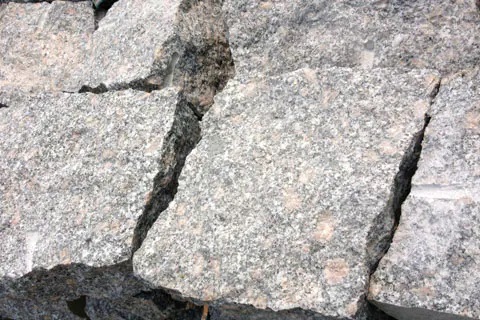
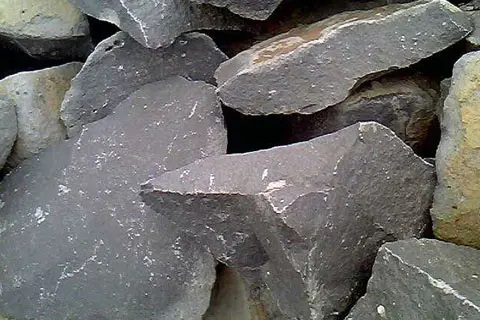
What are the 7 types of gold ore? What is the process of gold ore beneficiation?
- a. Quartz Gold Ore (Free-Milling Ore)
- b. Placer Gold (Alluvial Gold)
- c. Sulfide Gold Ore (Refractory Ore)
- d. Carlin-Type Gold Ore.
- e. IOCG (Iron Oxide Copper Gold) Ore.
- f. Oxidized Gold Ore.
- g. Polymetallic Gold Ore.
This proposal presents a 100 t/h (≈2,400 t/d) rock gold beneficiation plant built on the proven “Gravity Separation + Flotation” combined flowsheet, the same route referenced in the source article (Beidoou, Rock Gold Beneficiation) that achieves overall gold recovery >88% with a stable flotation concentrate grade of 80–120 g/t Au.
The flowsheet comprises four main stages — Three-stage crushing with closed-circuit screening → Closed-circuit grinding & classification → Gravity recovery (jigs + spiral chutes) → Flotation — followed by concentrate dewatering and dry-stacked tailings management. The design deliberately avoids a cyanide circuit in the base option, addressing the client’s environmental and safety priorities while keeping recovery high through early gravity capture of coarse gold.
2. Design Basis & Client Concerns
The design is driven directly by the client’s stated concerns. Each concern maps to a concrete design response:
| Client Concern | Design Response in This Proposal |
|---|---|
| Maximize gold recovery | Two-stage recovery philosophy: gravity first (jig captures coarse free gold, spiral chutes capture fine gold), then flotation of gravity tailings — targeting overall recovery >88% as per the reference flowsheet. |
| Stable, marketable concentrate grade | Regulated flotation chemistry (lime to pH 8–9, butyl xanthate collector, pine oil frother) with roughing–scavenging–cleaning stages to hold concentrate grade at 80–120 g/t Au. |
| Low CAPEX / simple layout | Compact multi-stage crushing + single grinding line; mechanical self-priming flotation machines reduce pumps, foundations and auxiliary piping; open civil design for tropical/African sites. |
| Low operating cost & energy efficiency | Closed-circuit grinding at −200 mesh 75%±5% (no over-grinding), gravity pre-concentration removes a large share of gold before flotation, reducing reagent and power per tonne. |
| Reliability & easy maintenance | Standard, globally stocked wear parts (jaw plates, crusher liners, mill liners, flotation impellers); localized maintenance plan; ≥92% plant availability target. |
| Environmental & safety compliance | Base flowsheet is cyanide-free (gravity + flotation only). Tailings filtered and dry-stacked to minimize water use and pond risk; dust suppression on crushing; process water recycled via thickener. |
| Local conditions (power, water, logistics) | Standard 380V/50Hz or 415V/50Hz equipment selection, diesel standby option; water balance design for arid sites with recycle ratio >85%; modular packages for road transport. |
| Short delivery & fast ramp-up | Engineering–fabrication–erection–commissioning program of ~8–10 months; operator training and 3-month performance guarantee run included. |
3. Process Description
3.1 Stage 1 — Crushing (closed circuit at 12 mm)
Raw ore (≤500 mm) is fed by a vibrating grizzly feeder to a primary jaw crusher for coarse crushing (product ≤150 mm). Belt conveyors carry the product to the secondary cone crusher and tertiary cone crusher for medium/fine crushing. The crusher product is screened on circular vibrating screens: oversize (+12 mm) returns to the cone crusher in a closed loop; undersize (−12 mm) proceeds to grinding. A metal detector and dust collection are provided ahead of the crushers.
3.2 Stage 2 — Grinding & Classification (closed circuit)
Powder ore is mixed with water in proportion and ground wet in an overflow ball mill with a staged ball charge for optimized grinding efficiency. Discharge enters classification (hydrocyclone cluster or double spiral classifier): coarse particles return to the ball mill; the overflow at −200 mesh 75%±5% flows to the gravity stage, ensuring full monomer liberation of gold minerals.
3.3 Stage 3 — Gravity Separation (recover coarse + fine free gold first)
Classifier overflow feeds a jig, which captures the majority of coarse free gold. Jig tailings pass to spiral chutes to retrieve additional fine gold. Gravity concentrates are cleaned on a shaking table (optional, for final cleanup) before dewatering. This early recovery step locks in high-value gold before flotation and reduces load on downstream circuits.
3.4 Stage 4 — Flotation (recover gold in gravity tailings)
Gravity tailings slurry is conditioned, then floated in mechanical stirring flotation machines arranged in roughing → scavenging → cleaning banks. Reagents: lime to adjust pH 8–9 (depressant/regulator), butyl xanthate as collector, pine oil as frother. The final flotation concentrate maintains a stable gold grade of 80–120 g/t, with overall plant recovery >88%.
3.5 Stage 5 — Concentrate Dewatering & Tailings Management
Gravity and flotation concentrates are combined into a thickener; underflow is dewatered by filter press to saleable filter cake. Flotation tailings are thickened and filtered for dry stacking, with clarified water returned to the process (recycle ratio >85%). This design minimizes fresh water demand and environmental footprint.
4. Main Equipment List (typical sizing — preliminary)
Capacities and powers are typical selections for 100 t/h and must be finalized after ore test work and detailed engineering.
| Stage | Equipment | Qty | Typical Specification | Power (est.) |
|---|---|---|---|---|
| 1 · Crushing | Vibrating grizzly feeder | 1 | ZSW-490×130 class | 15 kW |
| Primary jaw crusher | 1 | PE-900×1200 class; feed ≤500 mm → ≤150 mm | 110 kW | |
| Cone crusher (secondary / tertiary) | 2 | PY/HP-300 class | 220 kW each | |
| Circular vibrating screen | 2 | 2YK-2460 class; closed circuit at 12 mm | 30 kW each | |
| Belt conveyors + metal detector + dust collection | set | Various lengths, 800–1000 mm | ≈60 kW total | |
| 2 · Grinding | Overflow ball mill | 2 | Ø3200×4500 class (or 1× larger unit) | 630 kW each |
| Hydrocyclone cluster / double spiral classifier | 1 set | 2FG-30 class / FX cluster; target −200 mesh 75%±5% | ≈45 kW | |
| Slurry pumps & sumps | set | Wear-resistant rubber-lined | ≈120 kW | |
| 3 · Gravity | Jig machine | 4 | JT5-2 / AM30 class; 30(20)–0.5 mm | 5.5 kW each |
| Spiral chute (optional shaking table) | 12 | 5LL-1200 class; 2–0.074 mm (+ 6-S table for cleanup) | ≈20 kW total | |
| 4 · Flotation | Conditioning tank | 2 | Ø3000 class | 22 kW each |
| Mechanical flotation machines | 2 banks | SF/XCF-20 class ×6 cells (roughing+scavenging) + SF-8 ×4 (cleaning) | ≈45 kW/cell | |
| 5 · Dewatering | Thickener | 1–2 | Ø18–24 m high-rate | ≈15 kW |
| Filter press | 1–2 | 500 m² class | ≈30 kW each | |
| Reagent dosing & water systems | set | Lime, butyl xanthate, pine oil; process water | ≈50 kW |
Installed power (estimate): ≈ 3,500–4,500 kW · Specific energy ≈ 30–45 kWh/t · Main feed 380/415 V, 50 Hz (options for 60 Hz and MV switchgear).
5. Key Performance Targets
- 100 t/h
- >88%
- 80–120 g/t
- −200 mesh 75%±5%
- pH 8–9
- ≥92%
6. Operation & Maintenance
- Standardized wear parts (jaw plates, cone liners, mill liners/balls, flotation impellers) with global supply chains to minimize downtime.
- Preventive maintenance program with CMMS; monthly availability reporting against the ≥92% target.
- Operator and maintenance training package (2 weeks classroom + 4 weeks on-site) included.
- Instrumentation & control: centralized control room with basic automation (belt scales, density meters, pH control, level control).
7. Health, Safety & Environment
- No cyanide in the base flowsheet — major permitting, safety and tailings advantages.
- Dust suppression at crushers/screens; noise control enclosures; PPE program.
- Tailings filtered and dry-stacked; contact water contained and recycled; spill bunds and emergency containment.
Compliance with local environmental regulations; ESIA support documentation provided.
Pre:« Centrifugal Concentrator
Next: